An iconic shape with an outlaw's address.
An iconic shape with an outlaw's address.
Built by hand. Heated by fire. Parked on the edge of a lava flow.
The cabin
Copper standing seam over a white shell, a big deck on cable rail, and an aspen grove that comes right up to the back door. Every board of it went up by hand.
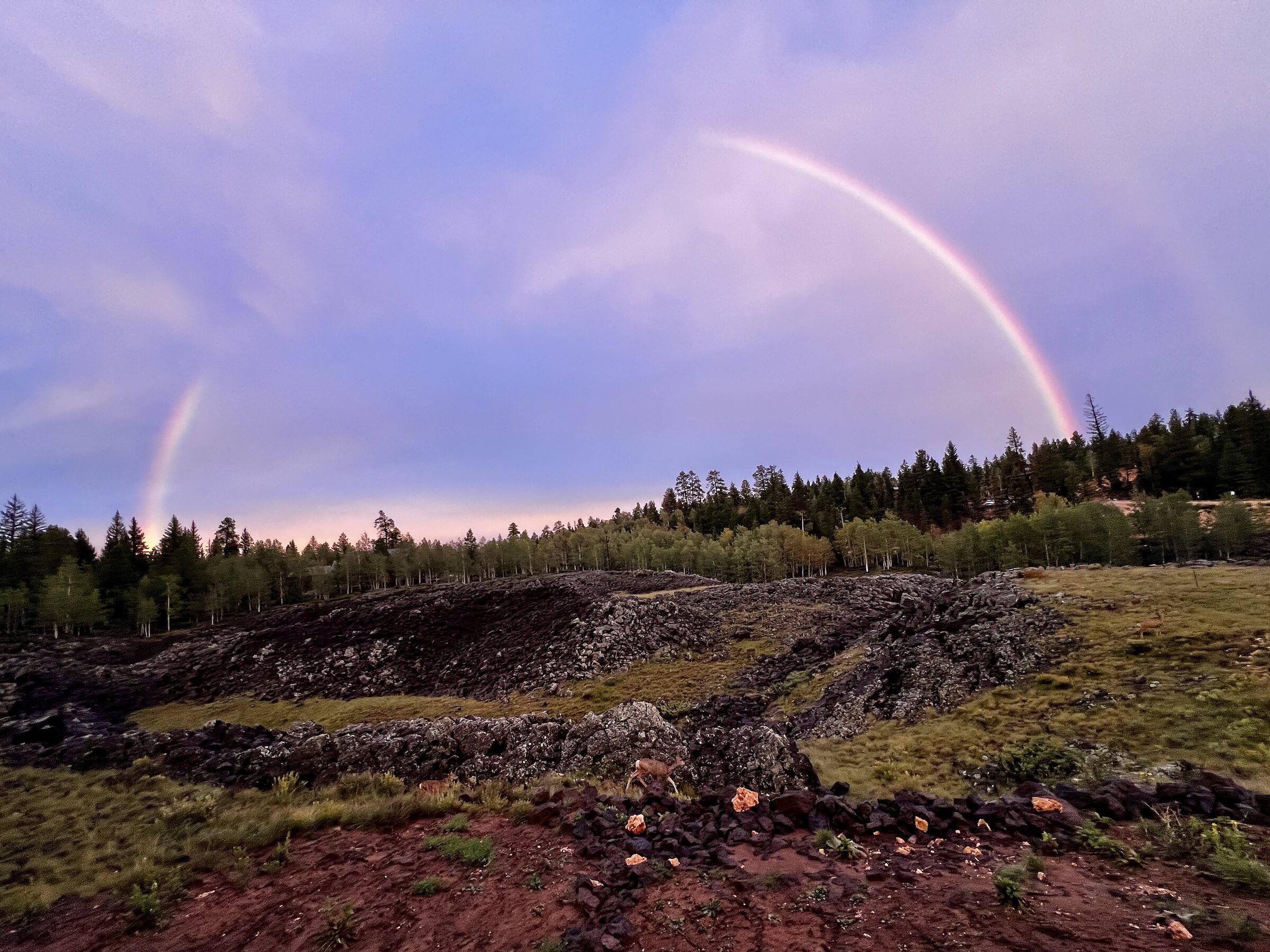
Weather crosses the flow in twenty minutes and leaves magic behind.
DUCK CREEK VILLAGE · KANE COUNTY · UTAH
The mountain
Highway 14 runs the spine of the Markagunt Plateau. Lakes, a lava-tube waterfall, and a ten-thousand-foot amphitheater, all inside twenty minutes of the front door.
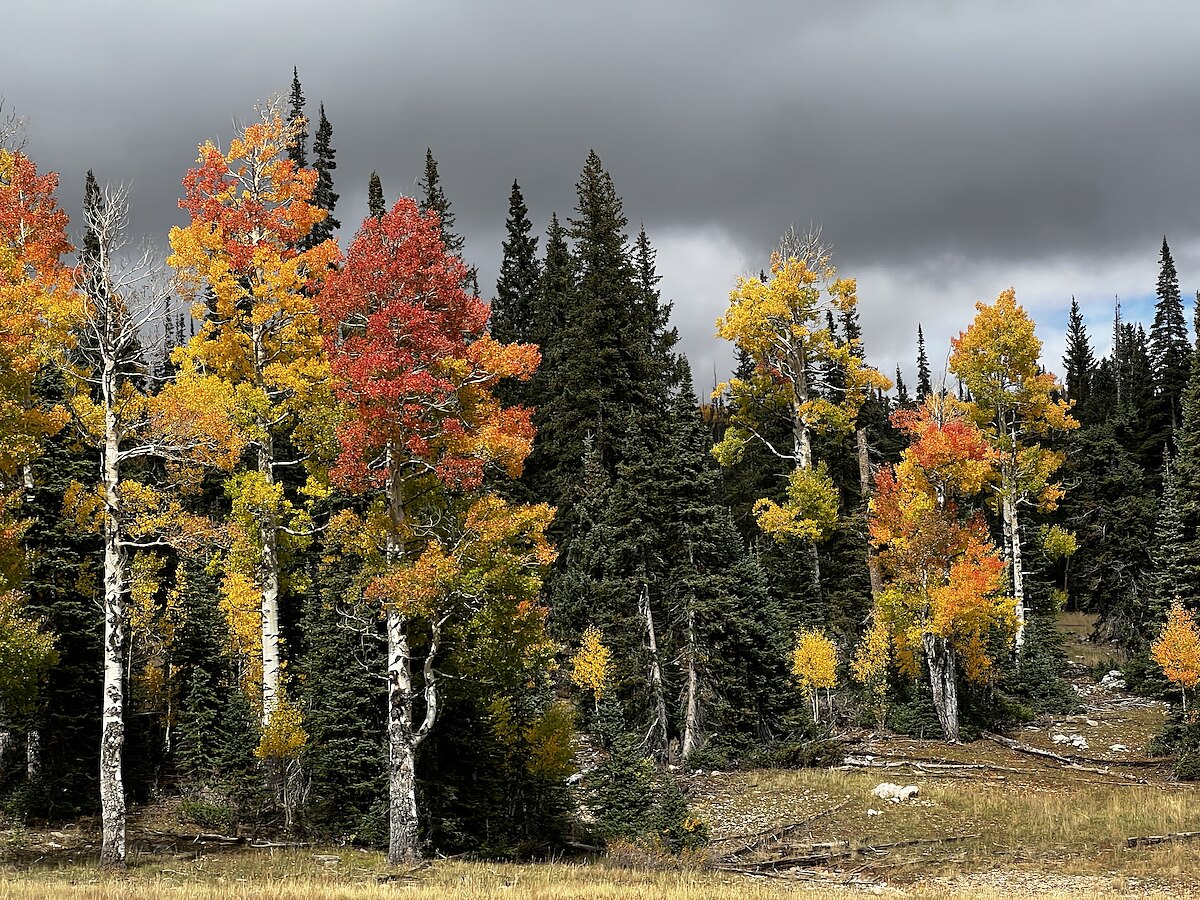
The aspens turn the last week of September and it is over in ten days.
BOOK EARLY FOR COLOR
Who was Etta
The frontier is full of legends, but she might be its greatest ghost.
Whispers say she was a respectable schoolteacher; others swear she was one of Fannie Porter's parlor girls down in San Antonio. Etta, Ethel, Place — historians doubt she ever gave her true name to a living soul. She was one of only five women granted passage into the Wild Bunch's impenetrable stronghold at Robbers Roost in southern Utah. Out there in the red rock canyons, every outlaw knew the truth: she could ride and shoot right alongside the deadliest men in the territory.
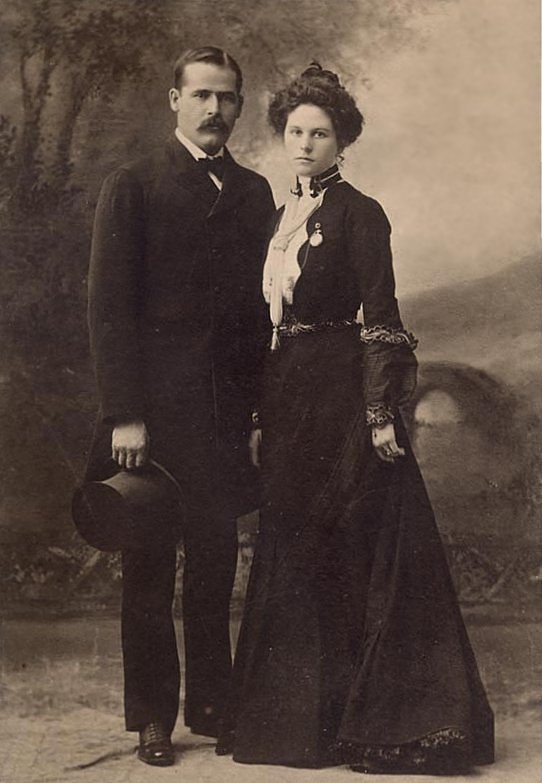
We only know her face because of a single, fleeting moment captured on glass. The portrait was snapped in New York in 1901, mere weeks before she and the Sundance Kid sailed for the edge of the map in Argentina. In it, Sundance casually holds a gentleman's top hat; pinned to her lapel gleams a gold watch, freshly bought by him at Tiffany's. They ordered exactly five copies as farewell keepsakes for their kin. Without those five photographs, her face would be entirely lost to time.
And then, the trail just goes cold. A Pinkerton detective file from 1906 reduces her to a handful of raw facts: twenty-seven or so years of age, five foot four, brown hair, possessing classic good looks. The wind blew her to San Francisco in 1907. Two years later, a woman fitting her exact description materialized at the U.S. consulate in Antofagasta, Chile, quietly asking for a death certificate for a man named Longabaugh. She stepped out the door and vanished into the fog of history. No grave, no census record, no final chapter.
The fireside theory folks like best claims she was actually Ann Bassett, the infamous cattle rustler they called "Queen Ann." A Los Alamos imaging scientist once analyzed photographs of the two women, matched a rogue cowlick at the hairline, and declared the mystery solved beyond a reasonable doubt. But time is a stubborn witness — other researchers point out that the timelines collide. While Etta was riding through South America, Ann was sitting in a Utah jail cell for rustling. Ann Bassett went on to die in 1956 in Leeds, Utah, a mere ninety minutes down the mountain from here.
We hold no hard evidence, nor do we care to go digging for any. Some secrets are meant to be kept. We prefer to believe she simply rode back home to the red dirt of southern Utah, kept her secrets sealed, and lived out a long, quiet life somewhere near the end of a dusty stretch that would one day be named Butch Cassidy Lane.
Already booked
How to wake the water up at the street, light the fireplace, run the fire pit, and switch to battery when the power drops. Everything you need to run the place, in one page.
Stay
Send us your dates and we'll come back the same day. We answer the phone too — it's a two-person operation, and one of us built the place.
No payment now. We'll confirm availability first.